

“Our doubts are traitors and make us lose the good we oft might win, by fearing to attempt.”
—William Shakespeare, Measure for Measure
“Doubt is a pain too lonely to know that faith is his twin brother.”
—Khalil Gibran, Lebanese-American poet, philosopher, and writer
“Why do you say, ‘If I can?’” Jesus asked pointedly, “Everything is possible if someone believes it is.”
The father exclaimed in desperation, “I do believe, but I need your help with my doubts!”
—From Mark 9:17-27
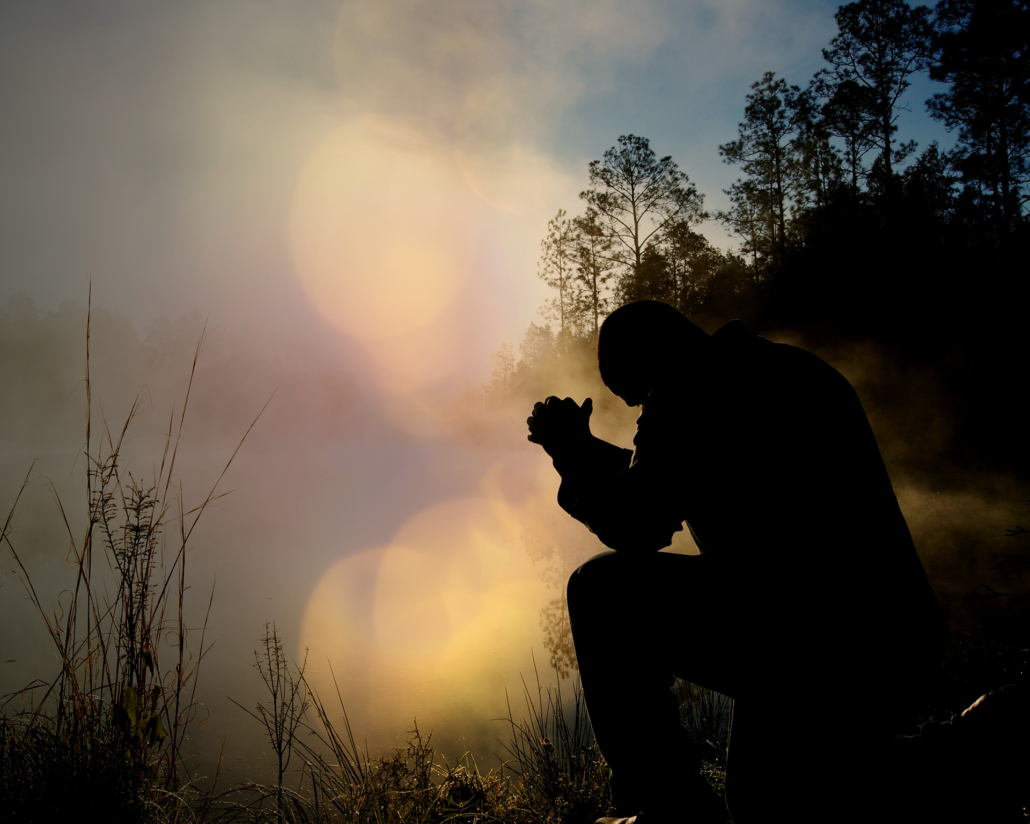
Doubting my Doubts
It had been a long time since I doubted. I mean, really doubted.
I had doubts about all kinds of things, spiritual and non-spiritual, but it’d been a while since I doubted my beliefs in Jesus. I had no doubt God existed. I had no doubt Jesus walked the earth, did great miracles, and died at the hands of the Roman Empire. It was my simple beliefs I started to question: whether God really intervened in our lives when we asked him to; if simple faith in Jesus truly decided eternal direction for individuals; or if God actually heard our prayers and answered back.
I had been so steadfast in my faith over the years I probably created a hostile environment toward doubters. I certainly encouraged doubt as one of the ingredients of true faith, but I had few periods of the kind of doubt people really struggle with; the kind which causes moments of fear in possibly being wrong.
I survived many fallen heroes—people who had such influence on me I would not be a believer without them. I’ve survived vicious attacks on my own character and ministry, something every person in ministry has. My faith in humanity has been decimated many times over, but not my faith in God—like the shadows are further proof the sun is shining; the more imperfect a human showed themselves to be, the more the concept of a perfect divinity was comforting.
My faith withstood a lot of hits.
But the diagnosis of my son’s autism in 2005, wounded me so deeply I felt lost, like I misplaced my spiritual GPS.
For so long I showed some level of compassion for those who struggled to keep the faith, but I admit I always saw it as a sign of weakness. I believed the under-educated were easily swayed by attacks on the veracity of the Christian belief system—prisoners of their own emotions experience crisis of faith when the tough times come. Not me. I’d been broken, betrayed, trampled on, and more, yet came out nearly unscathed.
This time was different. The exoskeleton protecting my convictions from all external attacks was providing no defense from the internal onslaught of my own distrust. My son had an incurable condition and despite my prayer and fasting, the remedy was impossibly elusive. I let myself reason, ‘Maybe it’s because the concept of an interventionist God is merely a comforting creation of desperate people who need hope.” My son’s diagnosis was my open wound which wouldn’t heal.
Perhaps, I thought, my faith was broken beyond repair.
Beauty and Belief
In 2009, as I reflected on my doubts of four years in writing parts of this chapter, I found myself on a small, twin-prop plane over the Caribbean after a week of speaking to almost every student on the small Island of Exuma, Bahamas. The plane was a little scary—I had never been in one that small at the time—but the view was the most unbelievable sight I’d ever seen. I pondered on believing this countless chain of islands 15,000 feet below my window, with the most amazing turquoise blue water the eye had ever beheld, came about without a designer. A leap of faith I could not make. It was as if the sand below the shallow water was a white canvas, painted with watercolors. If it were a photo, I would have sworn it photoshopped. The idea this art came about without an artist was unacceptable. Period.
However, my doubts persisted. If I was God’s child—if the father/son equation was the same dynamic I shared with my son—then why wouldn’t he heal my boy? All things being equal, I would step in front of a bus if I thought it would better Declan’s chances at a normal life.
So why? It’s the question I never allowed myself to ask no matter how painful life became. I was hurt and angry and racked with guilt for feeling hurt and angry. Most of all, I was numbed by the ever-present throbbing of my doubt.
I was hardly unique among fathers; I met many fathers who were facing far worse. I even caught myself feeling better about my challenges when observing others, but the fact others were going through what I was experiencing, didn’t keep me from asking where Jesus was in my time of need.
I wondered what he would say to me if he were walking the earth today, but it was not a rhetorical question. Some two-thousand years ago (give or take a few years for errors in the Gregorian calendar), he had a chance to answer the tough questions.
A Tough Day for a Dad
A man came to Jesus and said, “Teacher, I brought my son to you so you could heal him. An evil spirit has complete control over him and it won’t even let him talk. When it takes over, it brutally throws him to the ground and he becomes completely stiff, foams at the mouth and locks his jaw. I asked your disciples to free him of the evil spirit’s control, but they couldn’t.”
Jesus was frustrated. “You all lack faith! I have had it with you! How much do you need to see to build your faith? Bring the boy to me.” When they brought the boy to Jesus, the spirit saw Jesus and caused a seizure and the boy fell on to ground, thrashing and frothing from his mouth.
“How long has he been like this?” Jesus asked the dad.
“Since he was little. The spirit that controls him even throws into fires to kill him or into water to drown him. If you can help us, please have compassion and do whatever you can.”
“Why do you say, ‘If I can?’” Jesus asked pointedly, “Everything is possible if someone believes it is.”
The father exclaimed in desperation, “I do believe, but I need your help with my doubts!”
Jesus noticed the growing crowd of spectators and spoke directly to the evil spirit, “I’m talking to you, the spirit that has made this boy deaf and mute. Leave his body and never come back.
The spirit shrieked and the boy reacted violently as the evil spirit left him. The crowd thought he was dead but were astonished when Jesus took him by the hand and he stood up.[1]
Whenever I read this story, it’s like I’m standing there watching people speak uncomfortably about my son. I have never blamed people who stare or whisper to each other, I might even do the same if I were them. Declan makes weird noises and does strange things. When people don’t know he has special needs and get annoyed, irritated, or upset by something he does, I’m never sure if I should explain he’s autistic, knowing they will feel guilty, or keep it to myself, knowing they’ll continue to feel annoyed, irritated or upset.
The boy in story was infamous in his community. He was a source of fear, blame, and derision. Having a profoundly altered boy living in your neighborhood was scary, and having one in your family was not only scary, but it made you an outcast. Believe me, even today, I know.
Depending on your faith tradition, you may see this young man in one of two ways. Either this boy is literally possessed by a demonic entity, or the story is told from the perspective of the people of Jesus’ day. In the latter case, the author is telling the story of a boy who has epilepsy and/or some other profound medical condition. The people of the first century had no context for mental illness, epilepsy, autism, or any other such condition. With this in mind, the truth of the story is in how people see this boy.
I choose to take the story at face value—spiritual forces were at work. No matter how you read this story, the key figure is not the son; it’s the father.
I’m sure the father once had dreams for his son, but from the time his boy was a child, he had a terrifying condition. The son was unable to speak and experienced terrible seizures. He almost drowned, became burned because of his condition, and was probably covered with horrific scars. It is hard to imagine anything more terrifying for his parents.
Consider the entire community probably had the same attitude as the villagers during the end of Frankenstein, and you begin to understand the father’s situation. His son was a “real-life monster” living among them.
Believe me, parents of kids with special needs feel this all the time. The sense of rejection, fear, and anger compete for prominence, appearing in your worst of moments.
When you live with little hope, you learn to cope. Coping and hoping are not mutually exclusive, but the energy for one often arises from the other. They coexist, and often draw from the same emotional reservoir.
This father learned to cope, but when he heard Jesus was coming, he redirected some of his energy to hope.
If you don’t have a child with profound special needs, it’s hard to understand what it can mean to take them out in public. In the case of this boy, the effort was probably monumental. The risk of what could happen was huge. I know. Making sure our son is safe has been an unbelievable effort for my wife and me: four years of diarrhea; frequent complete lack of personal safety awareness; unwillingness to eat most things, combined with the willingness to eat dangerous things; it all gives me a small picture of what it took to try to get this boy to Jesus. Unless you’ve been there, it’s hard to understand what an undertaking it was to brave the crowds to find Jesus.
His father decided to channel some of his coping energy into hoping. Hoping Jesus could change the tragedy of his son into something resembling normalcy.
Even so, hope doesn’t eradicate doubt. When Jesus tells the father believing is the key to change, he is speaking directly to the heart of doubters. He knows the father may have brought his son to him hoping something could happen, but the father is far from an absolute belief in Jesus’ ability to help.
Overtaken by Doubt
In 2004, I read a story entitled “Upon this Rock” by John Sullivan, a young freelance writer for GQ Magazine. He became a Christian in his teens, after what he described as the inevitable experience of anyone who becomes friends with a evangelical Christian—the invite to church. In his case, it was a youth oriented small group, and he was amazed at how cool and smart the pastor of the church was. The small group met in the pastor’s house and included apologetics and hanging out afterwards. The church became the intellectual and spiritual home he had been looking for, and he was being trained to become a leader.
But during his junior year, “unsanctioned” books and a few bad experiences caused him to fall away from his relatively new faith. The crass commercialism and inartful performance of a well-known Christian Rock band at a concert where he volunteered, because it was framed as a ministry opportunity, was the final straw. After packing up the gear from the show, he gathered his friends to announce he was no longer a Christian. “My doubts have overtaken me,” he explained.
However, for the GQ story, he found himself “embedded” in an RV with a group of young evangelicals from West Virginia, heading toward Pennsylvania where the largest Christian music festival in the US, Creation, takes place. Along the way, he remembered what it was like to be around these kinds of people: devout but real; resolute but non-judgmental; believing but honest—these guys were merely trying to get it right as flawed humans, and they loved each other and were brought together by their common beliefs.
His condescension toward his former faith was slowly replaced with longing. His defensiveness gave way to brotherhood. He knew intellectually he could no longer believe what they believed. He knew this time in his life had been a stage of adolescent spiritual confidence and had been useful, but he also knew it was one to which he could no longer acquiesce.
Still, something stirred. Through these guys, he was experiencing Jesus again.
He felt betrayed by his own longing. Emotionally, he was still captivated by Jesus, but intellectually, he knew he couldn’t go back. He didn’t believe in Christianity anymore. He knew Jesus only as an extraordinary man, but the internal conflict of spiritual longing was profound:
“Once you’ve known Him as God, it’s hard to find comfort in the man. The sheer sensation of life that comes with a total, all-pervading notion of being—the pulse of consequence one projects onto even the humblest things—the pull of that won’t slacken. And one has doubts about one’s doubts.”
Belief wrapped in Unbelief
Jesus said faith and mustard resemble each other. It seems to me if the end of faith is a 30-foot-tall mustard bush, with a 20-foot wingspan, then the mustard seed stage might possibly be doubting one’s doubts. Here’s the thing though, this mustard-seed, doubt-doubting faith is the kind of faith Jesus said can relocate mountains.
Hebrews 11:1 states, faith is the reality of hope and the evidence of the unseen. It was inferred to me as a young man this is the closest thing to a Webster’s dictionary definition of the word faith. However, I have always thought most concepts are best understood through narrative, and this story of the man with the belief-unbelief juxtaposition is the narrative which explains it to me.
A father who seriously doubts Jesus can help his son makes the effort anyway, because it could be possible. He has serious doubts Jesus can help, but he doubts his doubts enough to try. “I believe but help me overcome my unbelief” is the definition of faith stuck in my brain like an itch I’m unable to scratch. Whenever I’m not certain, it causes me to doubt my doubts.
Sullivan makes this statement about Christian indoctrination: “Belief and nonbelief are two giant planets, the orbits of which don’t touch.” He argues if you look outside the belief system of Christian dogma, you will lose your faith. It’s one or the other. However, most of us find faith to be found in the overlap of belief and unbelief—faith isn’t necessary if you have unchallenged beliefs.
There’s no need to go looking for challenges to your belief either. Why would a loving God allow a beautiful little baby boy named Declan to have his brain wired wrong by a condition called autism? A condition with no known cause but a profound effect. Why? It isn’t a demon throwing him into the fire, though he has endangered his own life so many times it may as well be a murderous evil spirit.
The painful irony is I hadn’t felt the presence of God in four years. I preached almost every week somewhere. I prayed. I did what I knew I needed to do. Behaviorally and intellectually, I remained a thoroughly, devout, orthodox Christian, but emotionally, I felt agnostic.
Life itself caused me to doubt absolutely everything, but still, I moved toward Jesus. I doubted my doubts, and my doubts about my doubts were very formidable.
Epilogue
I wrote deeply about my doubt in 2009 in a series of journal entries, four years after my son had been diagnosed with autism, and It’s rather uncomfortable for me to read now.
At the time, I never talked about it publicly. I felt nearly hopeless, and I still hoped the doctors were wrong.
They weren’t. I was.
My son is still very autistic, but he’s also very awesome. God has shown me more things through my son than through any other person. Ever. He is handicapped, disabled, challenged or however else you want to label him, but he is also loved beyond measure. I look out for him and love him, including his weaknesses and oddities. I want to help him, but I no longer want to change him. He is a better person than almost anyone else I know. He has received a faith that most of us can’t achieve.
During the most profound time in my struggle to come to grips with my son’s condition, someone suggested Declan made us all better people. I cynically shrugged it off at the time, but now I know it’s true. More than anything, I now understand how God the father feels about me.
I am profoundly disabled. I have secret fears and sins only God knows. I might even look unlovable to others. Certainly, there must be some who feel sympathy for God, to have such a flawed son and to have to take such time and energy to protect and care for me. But, through all this, I now understand why he does what he does for me in a way you might not be able to. I now know things I couldn’t have known without having Declan in my life. Doubt has confirmed my faith.
I hope you allow the things which challenge your faith to teach you what you can’t learn by unchallenged belief. I hope you are overcome by doubts.
Then,
I hope you find yourself doubting your doubts.
For me, those doubts define my faith.
————————————————————-
Jesus met people exactly where they were.
To His closest followers, He called for bold leaps of faith.
To those just beginning their journey, He asked for small steps.
But the common thread? He always invited people into something that felt bigger than they were ready for. Faith was never easy—and it still isn’t.
That’s the nature of faith: just when you think you’ve arrived, Jesus calls you higher.
Change how you think about Jesus:
Jesus didn’t shy away from doubt—He welcomed it.
He had honest conversations with people who were struggling to believe.
He didn’t punish doubt; He engaged it.
What doubts do you need to bring into conversation with Jesus?
Challenge your Assumptions:
Faith isn’t necessary if you have unchallenged beliefs.
What doubts have you buried out of fear—fear of losing faith, or fear of what others might think?
What if engaging those doubts is the very thing that strengthens your faith?
Choose to Live Differently:
In the end, faith isn’t the absence of doubt—it’s the courage to move forward in spite of it.
What would your life look like if you lived with more faith than you do now?
What “safe” areas of your life need to be surrendered so you can live with bold, authentic trust?
[1] From Mark 9:17-27
This is currently a sample chapter. Come back for chapter supplements, etc.