

“An idol is usually a good thing that we make ultimate. We say, ‘Unless I have that, I am nothing.’”
―Timothy Keller, pastor and author from his Twitter feed
“When Christ calls a man, he bids him come and die.”
―Dietrich Bonhoeffer, German pastor, author, and anti-Nazi dissident
Huge numbers of people were following Jesus, so he turned around and warned them, “If you want to be a devoted follower of mine, you have to, by comparison, hate everyone else. If you don’t hate your parents, your wife and kids, your brothers and sisters—even despising your own life—you can’t really be devoted to me. If you can’t carry your own cross as you follow me, it’s impossible to be a fully committed follower of mine. Don’t even start following me if you don’t understand what it costs.
―From Luke 14:25-28a
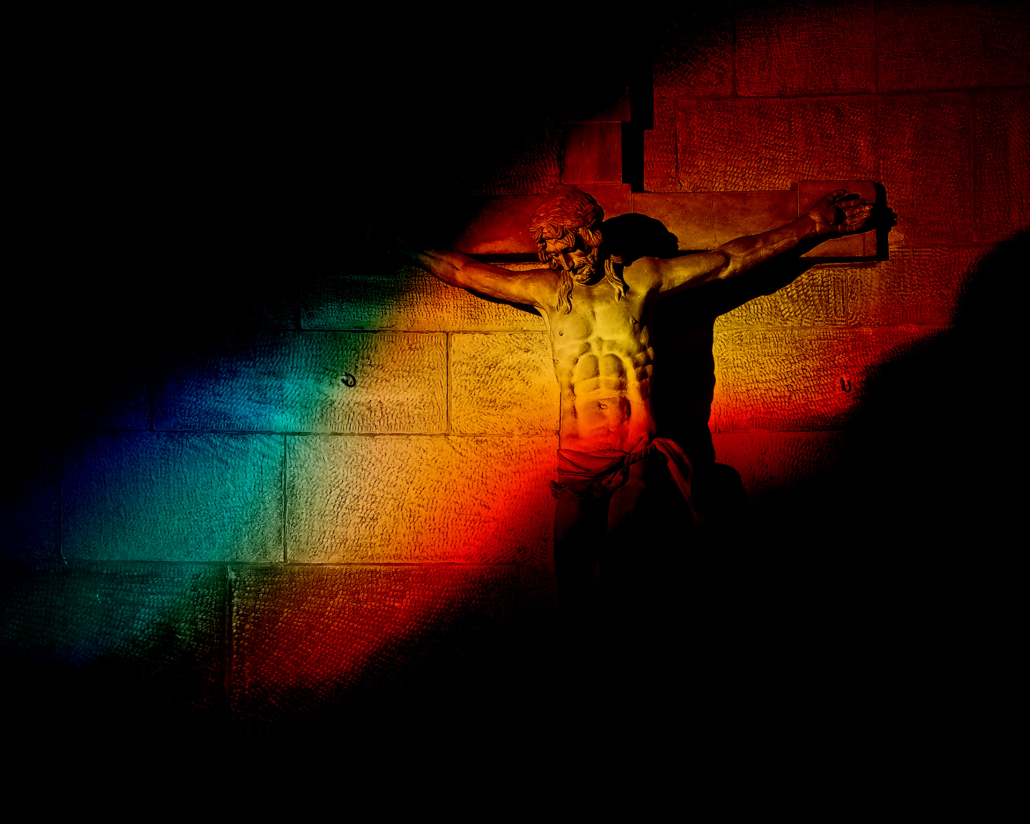
Contrast
I do a lot of video editing. Mostly I make videos to enhance my public speaking.
Since first asked to start speaking to people as a teenager, I have spoken to well over a million people, spanning forty countries and forty states thousands of times. I have spoken in school gymnasiums, at huge conferences and business conventions, in giant churches, and even to my former university professors (I was scared to death).
I have come to believe I am not great at it.
I’m probably better than most, even in the top percentiles, but the truth is, no one is great at speaking. I’ve heard famous, high-paid speakers and ingenious strategists, but few are great at speaking. If they were, we wouldn’t get bored, and we do get bored, at least I do.
Most of us who speak to people on a regular basis realize we “zone” in and out when we are listening to other speakers, but we speakers like to imagine the people listening to us hang onto every word. I know they don’t. It’s why I do a lot of video editing.
After years of studying what sticks with people and how ideas can be communicated most effectively, I have come to believe the obvious. People learn better when they can see and hear what you’re talking about, they love stories, and visuals help tell them the story.
I almost never speak without a video playing simultaneously. It’s like giving your audience a visual snack so they don’t wander off mentally and start wondering if they left the oven on.
I have set up 30-foot video screens in tiny schools in Africa and used 3D video in communities near an hour from the closest paved road; I have filmed video myself, created animations, and downloaded video from YouTube; I have edited, shortened, and enhanced a video to make it work better; but there’s one trick which improves nearly every video—increasing the contrast. Making the dark stuff darker and the bright stuff brighter makes everything clearer, and it drives focus onto the subject. At the other end of the spectrum, with the contrast turned down to zero, everything is the same shade and there is nothing left to see at all. Boring.
Contrast makes everything more distinct and sharper.
Harsh Words
Jesus used strong language to make his message clear. Like many effective communicators, his ability to use hyperbole to communicate the emphatic nature of his message helped him bring the point home. His strong language is one of the reasons he is the most effective speaker of all time. People were not bored when he spoke; they would listen to Jesus for hours without eating.
The problem we have in understanding the revolutionary message of Jesus, is we have sanitized his strong language. We glance over it and take it for granted. When he says, “Don’t imagine that I came to bring peace to the earth! I came not to bring peace, but a sword,[1]” we dismiss it without thinking about it too much. Sure, it’s shocking for a moment, but it doesn’t fit the picture of the Prince of Peace we have painted in our mind—so we move on, quickly. Jesus looks more like Gandhi than Genghis Khan in our brain’s portrait gallery. We don’t hang the picture of sword-wielding Jesus next to the lamb-tending Good Shepherd.
When Jesus says many people who think they are followers of his (those doing great miracles and helping others) will go to hell, we worry for a moment but try not to examine ourselves too closely.
Jesus isn’t using strong language only for the sake of rhetorical flourish. He is increasing the contrast. He wants to be clearer, more focused. He is letting us know the road to the kingdom is a road narrower than you think, and the highway to hell is, well, a highway.
“If you don’t hate your parents, your wife and kids, your brothers and sisters—even despising your own life—you can’t really be devoted to me.”[2]
It would be easy to say Jesus doesn’t want us to hate our family, because, of course, it’s true, but dismissing it so easily diminishes the reason why Jesus uses these harsh words in the first place.
He wants to draw a sharp contrast between good and ultimate.
Good things are good, but they aren’t eternal. Good things are beneficial, but they can’t last. By contrast, ultimate things have eternal value. They are immutable, infinite, and transcendent.
We are commanded to honor our father and mother, so why would Jesus use such severe statements to express the contrast between our love for them and our love for him? Because it’s how sharp the contrast is.
Here are a few more times he draws on this contrast.
“Don’t be afraid of those who can kill you. They can’t kill your soul. Only be afraid of God. He can kill both your body and send your soul to hell.[3]”
“You can’t serve both God and money. You will always hate one and love the other.[4]”
“So if your hand or foot causes you to sin, cut it off and throw it away.[5]”
Are we really supposed to ignore the danger from people who want to kill us? Should we really hate money? Are we to engage in self-mutilation to keep from sinning?
Don’t fear people who can kill you? It’s a good idea to stay safe, but serving God isn’t safe. Safety is good, but it isn’t ultimate.
Hate money? Money is useful for taking care of your family and it can do a lot of good, but it isn’t ultimate.
Cut off your hand? Your body is a good thing, and you should take care of it, but it isn’t ultimate.
Hate your mother, father, brothers, sisters, wife, kids? Being a respectful son/daughter and sibling is good, but it’s not ultimate. Being a decent spouse and parent is good—even essential, still not ultimate.
Why can’t it be both though? Why is the contrast so sharp? Is Jesus so insecure he gets as jealous as a teenage boyfriend when his best girl glances at another guy? Surely the creator of the universe is secure enough in his own identity to handle a little competition.
This contrast isn’t about his identity, it’s about ours.
Real ID
Jesus is telling us our identity must be in him or nothing else will work. The good things become better when we get our priorities right. Even good things become toxic when we find our identity in them. When we say, “Unless I have it, I am nothing,” we have defined our personhood with a dangerous definition.
Why? Because good things can be lost—ultimate things cannot.
This idea is central to the message of Christ. When he says, “Don’t let life’s necessities—what you eat and drink and what you wear—dominate your thoughts. Go after the Kingdom of God and he’ll give you everything you need,”[6] he’s making the same point. When he says, “Don’t build your treasure here on earth where moths and rust destroy things and thieves steal them, but build up your treasure in heaven,”[7] he’s laying out the same priorities.
Why? Because, again, good things can be lost—ultimate things cannot.
Many of us want to add God to our lives in some sort of God-is-my-co-pilot accessory to our already-awesome lives. But consider this:
-If you could unravel all the DNA in your body, it would span 34 billion miles. Enough to reach the planet Pluto, and back, six times.
-Our sun is so large you could fit the earth inside of it 1.3 million times.
-After the sun, the closet star[8] is 25 trillion miles away. It would take well over 100 years to get there with modern space travel.
-There are 300,000,000,000,000,000,000,000 (300 Sextillion) stars like our sun in the universe, more than all the grains of sand on Earth.
-Matter makes up only 5% of the universe. The rest is held together by unknown forces. The unknown forces are probably unknowable.
The God who created the universe wants to have a relationship with you. Don’t put a God like him in the co-pilot seat. He wants to fly the plane, and you want him to fly the plane.
St. Augustine of Hippo said, “Christ is not valued at all unless He is valued above all.” God isn’t a plug-in, he’s the program. Nothing else works.
The apostle Paul writes, “In Christ, there’s no gender, there’s no economic status, there’s no ethnicity.”[9]
Ethnic heritage is interesting, even important, but not ultimate. It is not an ultimate identity. It is merely good.
There are so many good things. Being wealthy might make you comfortable, but it won’t do anything for the ultimate issues in your life. Being fit and healthy can extend your life, but not forever. You will become frail and die. Safety consciousness can’t protect you from everything. We will all face God in the end. Time is an undefeated foe in this world. Wisdom is valuable and can lead to ultimate things, but in and of itself, is not ultimate.
Our ultimate identity must come from him. If you find your identity in being a parent, a son, a daughter, a husband, a wife, a brother, or a sister—an identity crisis is on the way. You will not—cannot—always be those things. Your parents will probably die before you. Your kids may move away and have their own kids. God forbid; they could die before you too.
Unless tragedy hits and takes both husband and wife at the same time, one spouse will leave the other behind. The “until-death-do-we-part” part will happen, and that’s if you have a good marriage. Bad ones end sooner—and often more tragically.
You will, someday, no longer have the career you may have now. Who will you be then? The great recession revealed to a whole new generation how savings can be wiped out and how a home can become a negative asset. You could even lose it—along with your good credit score. At some point your good health will, almost certainly, be lost to disease, injury, or age.
When everything else is gone, the only thing you will have left is the only thing you need—an identity found in Christ. It cannot be lost—even in death.
Saved Alone
Horatio Spafford was a prominent and wealthy lawyer in Chicago in the second half of the 19th century. He was also an elder in the Presbyterian church and a friend and financial supporter of famed evangelist, D.L. Moody. By the time he was in his forties, Spafford had five children, a boy and four girls, with his wife Anna. He had amassed enough wealth and needed to diversify his savings portfolio. In the spring of 1871, he invested heavily in real estate holdings north of Chicago. In October of 1871, the Great Chicago fire reduced the city to ashes, destroying almost all of Spafford’s life savings. His son had recently and tragically died of scarlet fever.
Two years later, Spafford was still in financial ruin, but felt compelled to accompany and support his friend, D.L. Moody, in England. He decided his wife and four daughters would also travel with him, but business demands delayed Spafford’s trip. Spafford and his wife decided she and the girls would travel ahead of him and he would join them after what would hopefully be a short delay.
On November 22, 1873, while crossing the Atlantic, the recently renamed SS Ville du Havre, the steamship carrying Anna and her four daughters, was struck by an iron clipper in the middle of the night and nearly broken in half. The vessel was carrying three hundred and thirteen souls. It sank in twelve minutes. In the collision, some of the lifeboats were destroyed and most of the life jackets were stuck to the recently painted deck. Only eighty-six people survived.
In the chaos following the collision, Anna Spafford rallied her daughters, carrying the youngest, Tanetta in her arms. As the ship sank, debris knocked Tanetta from her mother’s arms, and she drowned. The other three girls dog paddled as long as they could, but soon succumbed to hypothermia from the near freezing water. Anna was found unconscious, floating on a wooden plank.
The news traveled the world, and back in Chicago, Horatio Spafford awaited news of his family’s fate. Nine excruciating days later, Horatio received a telegram. It was sent by Anna and began, “Saved alone.”
A few days later, as Horatio Spafford traveled the same route his wife and daughters had taken, he passed near the watery grave of his four girls and wrote the now famous lyrics to the hymn, It is Well with My Soul:
When peace like a river, attendeth my way,
When sorrows like sea billows roll;
Whatever my lot, Thou hast taught me to know,
It is well, it is well, with my soul.
Though Satan should buffet, though trials should come,
Let this blest assurance control,
That Christ has regarded my helpless estate,
And hath shed His own blood for my soul.
My sin, oh, the bliss of this glorious thought!
My sin, not in part but the whole,
Is nailed to the cross, and I bear it no more,
Praise the Lord, praise the Lord, O my soul!
For me, be it Christ, be it Christ hence to live:
If Jordan above me shall roll,
No pang shall be mine, for in death as in life,
Thou wilt whisper Thy peace to my soul.
But Lord, ’tis for Thee, for Thy coming we wait,
The sky, not the grave, is our goal;
Oh, trump of the angel! Oh, voice of the Lord!
Blessed hope, blessed rest of my soul.
And Lord, haste the day when the faith shall be sight,
The clouds be rolled back as a scroll;
The trump shall resound, and the Lord shall descend,
A song in the night, oh my soul!
It is well with my soul,
It is well, it is well, with my soul.
Ultimate Value
A beautiful family is an amazing gift. It is good, but not ultimate.
An excellent reputation is valuable and good, but not ultimate.
Financial security is a source of great comfort. It is good, but it is not ultimate.
Good health is a blessing from God. It is good, but still not ultimate.
A fulfilling career is satisfying. It can be good, but it cannot be ultimate.
Being created and loved by the creator of the universe is ultimate. Living the purpose the savior of humanity calls you to is ultimate.
Like diamonds displayed on a background of black velvet, the contrast proves the shimmering beauty. Velvet is a valuable material, but you would never gift it to someone who you were asking to spend the rest of their life with you. Velvet is good, but the diamond has become the ultimate symbol of undying love.
Hopefully the day never comes when you must choose between your family and your faith. It does happen, but choosing between your family and Jesus isn’t why he says you must hate your family.
The issue is your identity. If you find your value in anything in this world, you will have nothing left when those things are lost.
In contrast to your love for the ultimate, your valuation for good things must look like hatred.
Then, and only then, can you love the good things in the way God, who gives all good things, intended.
——————————————————–
Jesus wasn’t an excellent teacher, a great leader and good example.
He was so much more than that. To reduce him to any of those things is to diminish what he said about himself. It is an attempt to deny that a choice has to made about him. His claims about himself were that he is…
the bread of life (6:35), the light of the world (8:12), the door (10:7), the good shepherd (10:11, 14), the resurrection and the life (11:25), the way the truth and the life (14:6) and the true vine (15:1).
Anyone who would claim such things about themselves is either suffering from a narcissistic personality disorder or is something much more than a teacher or religious leader.
Change how you think about Jesus:
Jesus didn’t soften his message to make it easier to accept. He spoke in ways that forced people to confront their values, priorities, and identities. His call to “hate” even the closest relationships wasn’t a call to cruelty—it was a call to radical reordering of what matters most.
Jesus called people to make tough choices. What tough choices is he calling you to make?
Challenge your Assumptions:
What things in your mind do you regard as ultimate?
Which are really only good things?
Is there a part of your identity—your role, your reputation, your success—that you’ve made ultimate?
What good things in your life might be competing with the ultimate?
Choose to Live Differently:
What would it cost you to truly follow Jesus—not just admire him, but obey him?
What fears or attachments might you need to surrender to live with clarity and purpose?
How do you need to re-arrange your priorities to reflect the ultimate/good contrast?
[2] Luke 14:26
[3] Mathew 10:28
[4] Matthew 6:24
[6] Matthew 6:31-33
[7] Matthew 6:19-20
[8] Alpha Centauri C is 4.24 light-years from our sun
[9] Galatians 3:28
This is currently a sample chapter. Come back for chapter supplements, etc.