Have this chapter read to you on YouTube – Click Here
A new audiobook chapter is released each week on the podcast and YouTube channel starting May 1st, 2026 completely free. Subscribe now
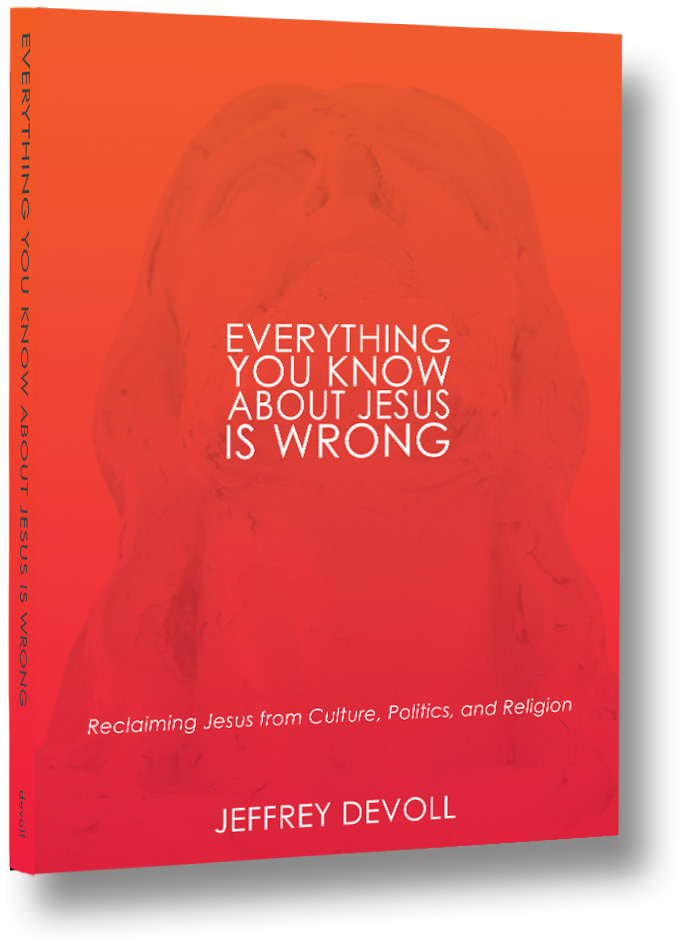
Everything You Know About Jesus Is Wrong
Oysters
Going Deeper

How Pearls Actually Form
The familiar story says that a grain of sand slips into an oyster, irritates it, and eventually becomes a pearl. That explanation is memorable, but it is usually too simple. Pearl formation more often begins when a parasite, a tiny organism, damaged tissue, or organic debris gets into the mantle tissue of a pearl-producing mollusk. The mantle is the tissue responsible for producing the shell.
When that tissue is injured or displaced, a pearl sac can form around the intrusion. The sac begins depositing nacre, the same material that creates the iridescent lining commonly called mother-of-pearl. Nacre is largely aragonite, a crystalline form of calcium carbonate, held together by an organic matrix that includes conchiolin. Its luster comes from light interacting with extremely thin overlapping layers.
Natural pearls form without human intervention. Cultured pearls use the same biological process, but a technician deliberately implants mantle tissue and, in many saltwater species, a bead nucleus. Shape depends partly on where the pearl forms and how evenly the sac deposits material. Perfectly round pearls are not the norm; irregular pearls are called baroque pearls, a term historically associated with irregular form.
That biology sharpens the chapter’s metaphor. The pearl is not the foreign object prettied up with a little polish. It is a defensive structure created by living tissue, layer after layer, around something the animal cannot simply ignore.

Mark 3:21 Is More Complicated Than It Looks
Translations handle Mark 3:21 differently. Several modern versions say Jesus’ family went to restrain him because they said he was out of his mind. Others translate the Greek expression as “his own people,” “his associates,” or “his friends.” The underlying phrase, hoi par’ autou, literally refers to those belonging to or associated with him and does not identify the group as precisely as an English reader might assume.
The larger literary structure is important. Mark first says that Jesus’ relatives or associates set out to seize him. Then Jerusalem scribes accuse him of operating by demonic power. Mark returns to Jesus’ mother and brothers waiting outside at the end of the scene. This is one of Mark’s intercalations, often called a “sandwich,” in which one episode is placed inside another so that the stories interpret each other.
The verb translated “take charge of,” “restrain,” or “seize” is krateō, a forceful word that can mean taking hold of someone. The expression translated “out of his mind” is exestē, related to standing outside oneself. In context, the language describes conduct others regarded as uncontrolled or irrational, not a clinical psychiatric diagnosis.
The passage therefore gives us two judgments on Jesus at once. People close to him fear he has gone too far; recognized experts claim his power is demonic. Mark does not pause to defend Jesus with an editorial speech. The narrative forces the reader to decide which explanation makes sense of what follows.
Why “Eat My Flesh and Drink My Blood” Was So Difficult
John 6 becomes far more understandable when read against Israel’s food laws. Leviticus 17 and Deuteronomy 12 prohibit consuming blood because life is in the blood and blood belongs to God. The language of drinking blood would therefore sound not merely strange but ritually and morally offensive to a Jewish audience.
The setting also matters. The chapter begins with bread in the wilderness and repeatedly echoes Israel’s manna story. Jesus does not simply promise another supply of miraculous food. He places himself where the manna once stood: bread given by God, necessary for life. The argument escalates from believing in him to eating his flesh and drinking his blood.
Christians disagree about how directly the passage refers to the Eucharist. Sacramental traditions hear strong Eucharistic language. Many Protestant interpreters emphasize believing, receiving, and participating in Jesus rather than a direct description of communion. John does not include the bread-and-cup institution scene found in the Synoptic Gospels, which keeps the debate open.
Whatever position someone takes, the offense is not removed. Jesus claims that life depends on participation in him, not merely agreement with his ideas. John reports that many disciples stopped following him after this teaching.
Destroy This Temple: A Claim About Sacred Space
John 2 places Jesus’ temple disruption near the beginning of his public ministry, while Matthew, Mark, and Luke place a temple action during his final week. Scholars disagree about whether John relocated one event for theological reasons or whether there were two related incidents. The Gospels themselves do not resolve that historical question.
When Jesus says, “Destroy this temple, and I will raise it again in three days,” his listeners naturally understand the stone complex. Herod’s temple project had been under construction for decades. John explains that Jesus was speaking about his body, but the original audience does not receive that explanation.
The claim is significant because the temple organized sacrifice, pilgrimage, purity, national memory, and the symbolic presence of God. Replacing temple language with body language is not an ordinary metaphor. John’s Gospel later develops the same theme through living water, worship outside a single mountain, and God dwelling with humanity through Jesus.
At Jesus’ hearing, witnesses repeat a version of the temple statement, which shows how threatening it sounded. Even if the witnesses distort it, they preserve the central issue: Jesus’ words implied authority over Israel’s most sacred institution.

What Was Happening in the Temple Market?
Pilgrims needed animals suitable for sacrifice, and travelers carrying regional currencies needed to obtain acceptable coinage for temple obligations. In that sense, animal sellers and money changers served real practical needs. The Gospels do not provide a price list, so claims that Jesus acted only because every merchant was charging an inflated rate go beyond the evidence.
Jesus explains the action by combining two prophets. “My house will be called a house of prayer” comes from Isaiah 56, where foreigners and previously excluded people are welcomed to God’s house. “Den of robbers” comes from Jeremiah 7, where people commit injustice and then treat the temple as a place of safety from judgment.
A robber’s den is not where robbery normally occurs. It is where robbers retreat after the crime. Jeremiah’s accusation is that worshipers use sacred space as protection while refusing ethical reform. Jesus’ quotation therefore challenges more than noisy commerce. It invokes prophetic judgment against a religious system that mistakes ritual activity for immunity.
Mark places the temple action between the cursing and withering of a fig tree, another of Mark’s narrative sandwiches. The fruitless tree interprets the temple scene, and the temple scene interprets the tree. The issue is not simply a badly managed marketplace; it is a public judgment on fruitless worship.
The Whip of Cords: What the Text Does and Does Not Say
Only John mentions Jesus making a whip from cords. The sentence says he drove “all” from the temple area, “both sheep and cattle,” then poured out the money and overturned tables. The grammar leaves room for debate about whether “all” refers primarily to the animals with their handlers or also to the merchants themselves.
John does not say Jesus struck a person. Paintings and films often supply details the text does not. The whip makes sense as a tool for moving livestock, especially cattle, through a crowded court. That does not make the scene gentle, but it prevents us from claiming more violence than John describes.
The act resembles the symbolic actions of Israel’s prophets. Jeremiah smashed a jar, Ezekiel built a model siege, and Hosea’s family life became part of his message. Prophets did not only deliver speeches; they sometimes embodied judgment in public actions. The temple disruption belongs in that tradition.

John the Baptist and the Elijah Signal
John’s clothing is not included merely to make him colorful. Second Kings 1:8 identifies Elijah by a hairy garment and leather belt. Matthew and Mark describe John in camel hair with a leather belt, making the connection difficult to miss. Malachi closes with a promise that Elijah will come before the day of the Lord, and Luke says John will go before the Lord in the spirit and power of Elijah.
The New Testament preserves a useful tension. Jesus identifies John with the expected Elijah role, while John denies being Elijah when asked directly in John 1. The usual Christian explanation distinguishes literal identity from prophetic function: John is not Elijah returned in person, but he performs the promised Elijah-like ministry.
The wilderness also carries biblical memory. Israel passed through the wilderness before entering the land, and Isaiah 40 announces a voice in the wilderness preparing the Lord’s way. John calls people away from ordinary centers of power and back toward the Jordan, a boundary associated with Israel’s entry into a new life.
Jewish ritual washing already existed, so water itself was not new. What made John’s baptism distinctive was its public, one-time association with repentance and readiness for coming judgment. His practice treated covenant insiders as people who also needed cleansing rather than allowing ancestry to function as automatic security.
Why John’s Criticism of Herod Was Political
The Gospels connect John’s imprisonment to his criticism of Herod Antipas’ marriage to Herodias, who had been married to Herod’s brother. John’s objection stands against the background of Levitical marriage restrictions. Publicly challenging a ruler’s marriage was not merely offering private moral advice; it questioned the legitimacy and conduct of the court.
The Jewish historian Josephus also reports John’s execution, but emphasizes Antipas’ fear of John’s influence over large crowds and the possibility of unrest. The Gospel and Josephus accounts are not identical, but they are not mutually exclusive. A ruler could fear both a prophet’s moral criticism and the political force created by popular loyalty.
John’s death therefore fits the Elijah pattern in more than clothing. Elijah confronted Ahab and Jezebel; John confronted the Herodian household. The wilderness prophet stood outside court patronage and could say what people dependent on the palace could not.
The Trilemma: History, Value, and Limits
The liar-lunatic-Lord argument is normally associated with C. S. Lewis, but Lewis popularized rather than invented it. Scottish preacher John Duncan formulated a clear version in the nineteenth century: conscious fraud, self-deception, or divinity. Watchman Nee used a similar argument before Mere Christianity, and earlier Christian writers had made related either-divine-or-deceptive arguments.
The argument works best against one specific claim: that the Gospel portrait can be accepted whole while Jesus is reduced to a merely admirable moral teacher. If Jesus knowingly made the claims attributed to him, those claims demand a larger category than moral advice.
The argument does not establish by itself that every saying in the Gospels is historical, nor does it answer whether Jesus’ claims have been interpreted correctly. Critics add other options: legendary development, mistaken reporting, metaphor misunderstood as literal claim, or an incomplete set of psychological possibilities. Calling it a trilemma does not make those questions disappear.
Its proper use is therefore diagnostic rather than conclusive. It exposes tension in saying, “I accept the Gospel Jesus as a great teacher but reject everything he said about his authority.” It is not a substitute for investigating the Gospel sources, resurrection claims, and historical context.

Rejected Stone, Cornerstone, Stumbling Stone
Psalm 118:22 says the stone rejected by the builders became the chief cornerstone. The psalm belongs to the collection traditionally sung at major festivals, including Passover, and celebrates reversal: a rejected or endangered figure is vindicated by God.
Isaiah develops related but distinct stone images. Isaiah 28 describes a tested cornerstone laid in Zion as a secure foundation. Isaiah 8 describes the Lord as both sanctuary and a stone over which people stumble. The same divine reality can become security to one person and an obstacle to another.
Jesus quotes Psalm 118 after the parable of the tenants, directing the image toward leaders who reject the son. Acts 4 applies it to the authorities who rejected Jesus, while 1 Peter combines Psalm 118 with both Isaiah passages. The New Testament does not present Jesus as a decorative stone that everyone admires. He is the stone that establishes alignment and the stone that exposes misalignment.
That provides a more precise biblical parallel to the chapter’s oyster image. The problem is not simply that Jesus has rough edges. The problem is that people responsible for evaluating the building can misidentify the stone on which the entire structure depends.
Parables Were Not Sermon Illustrations
Modern sermons often use illustrations to make a difficult point easier. Jesus’ parables could do the opposite. They used familiar material—soil, debt, harvests, weddings, landlords, family conflict—but often ended without a neat explanation. Some concluded with reversal, judgment, or an unanswered question.
Mark 4 connects parables with Isaiah 6, a prophetic commission in which hearing does not automatically produce understanding. That does not mean Jesus wanted sincere listeners to fail. It means the stories disclosed people’s posture. Curious disciples asked for more; hostile listeners could dismiss the story without submitting to its claim.
Interpretation also requires restraint. Not every object in a parable is a coded symbol. Some parables work through a single comparison; others are more allegorical. Reading them against first-century agriculture, debt, honor, landholding, and household life often clarifies why the original audience heard more tension than a modern reader does.
Questions for Further Study
- Compare several translations of Mark 3:21. Which words change, and what interpretive decisions are hidden in those differences?
- Read John 6 alongside Leviticus 17 and Deuteronomy 12. Which part of Jesus’ language would have created the greatest offense?
- Compare John’s placement of the temple action with the Synoptic Gospels. What theological emphasis does each narrative placement create?
- Read Jeremiah 7 beyond verse 11. How does the full sermon change the meaning of “den of robbers”?
- Compare John the Baptist with Elijah in 2 Kings 1 and Malachi 3–4. Which details are direct echoes and which are later interpretations?
- What can the trilemma legitimately establish, and what historical questions must still be investigated?
- Trace the stone passages from Psalm 118 and Isaiah into Matthew 21, Acts 4, Romans 9, and 1 Peter 2. How does each writer adapt the image?
If You Want to Dig Further
For the biology behind the chapter’s central image, read a museum or zoological explanation of pearl sacs, mantle tissue, nacre, and the distinction between natural and cultured pearls. For Mark 3, compare the NIV, NRSV, ESV, NET, KJV, and NASB, then consult a technical commentary that discusses hoi par’ autou and Mark’s sandwich structure.
For the temple, read Isaiah 56, Jeremiah 7, and Mark 11 as complete units rather than isolated quotations. For John the Baptist, compare 2 Kings 1:8, Isaiah 40, Malachi 3–4, Luke 1, and John 1. For the trilemma, read Lewis’ actual argument in Mere Christianity alongside both sympathetic and critical assessments so the argument is not asked to prove more than it can.