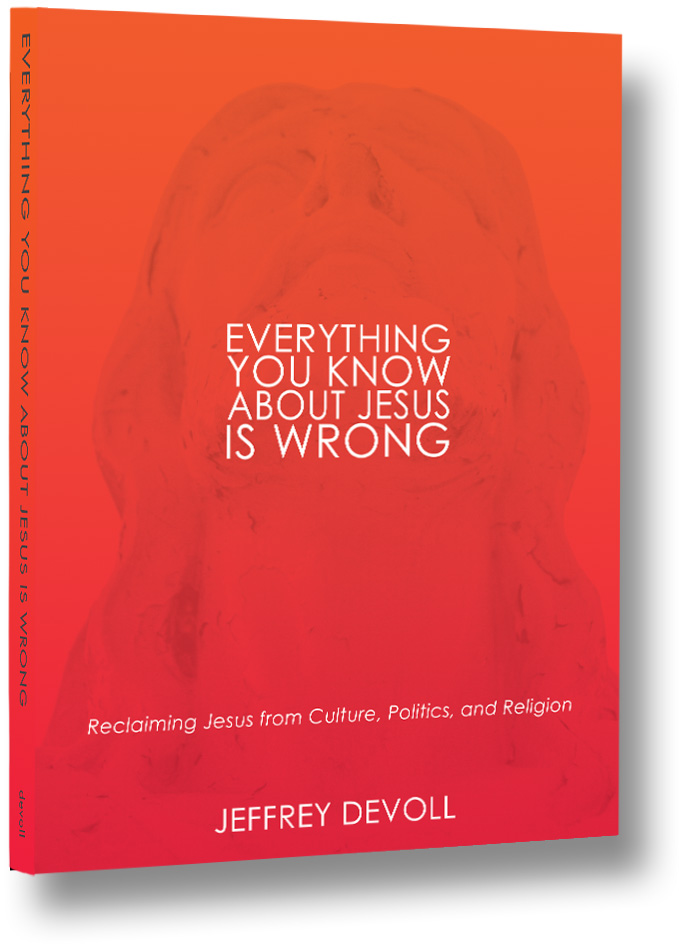
Have this chapter read to you on YouTube – Click Here
A new audiobook chapter is released each week on the podcast and YouTube channel starting May 1st, 2026 completely free. Subscribe now
Introduction: Josh
“I am a historian, I am not a believer, but I must confess as a historian that this penniless preacher from Nazareth is irrevocably the very center of history.”
—H.G. Wells
“The birth of Jesus marked the beginning of a movement that defied all historical expectations. That a crucified criminal from a backwater province of the Roman Empire would become the central figure of Western civilization is, from a purely historical standpoint, astonishing.”
—Bart D. Ehrman, agnostic historian and professor
“There was nothing attractive or compelling about his physical appearance, nothing drawing us to him.”
—The prophet Isaiah, from chapter 53, verse 2
Josh wasn’t someone who would impress you when you saw him. He was probably short by today’s standards—maybe 5’1″ or 5’2″, like most men around him (not that anyone was measuring for his driver’s license). With his short, unstyled hair and the unremarkable clothing of a poor blue-collar worker, his country accent made him stand out when he went to the big city, but not among the other construction workers in the small town where he learned his trade from his dad.
He was religious, but so was everyone else where he grew up.
Apparently, he never found the right girl, because he was single way past the point that other men around him had four or five kids. He seemed to like kids and had lots of close relationships with women. He was very close with his mom, so maybe that was it—maybe he was a “momma’s boy.”
When he traveled, he mostly camped wherever he was when he got tired. He wasn’t exactly homeless, but once remarked that a fox with a hole in the ground had a better place to stay than he usually did.
He didn’t really seem to care about making money, but he liked to help people. He certainly talked about money a lot, but he didn’t have much of it.
He didn’t seem to think much about politics or art or philosophy, but he did have a way with words. He wasn’t an author or anything like that.
Although he wasn’t particularly well-educated, he did seem to have an emotional intelligence that was exceptional—he just got people. And he was one of those people who seemed to speak the truth whenever he spoke. Sometimes that made people pretty uncomfortable.
Josh didn’t seem like the kind of guy who would change the world if you didn’t know him. Most people who do go after fame or political power, or maybe try to get wealthy and influential through business and philanthropy. It wasn’t like he didn’t think about those things—he had lots of thoughts about them—but he was apparently disillusioned with them.
Josh just kind of talked wherever he went and people did listen. There was no big production or tour, but people listened. He had a code that he lived by and that he could explain in a way that most regular people could just get. But there were lots of people who didn’t understand his stories at all. He never seemed to care when people didn’t get what he was talking about.
He had a lot of friends—mostly blue-collar, salt-of-the-earth, regular people. Religious people called them “sinners.” His closest friends could be brash and ambitious in a way that he wasn’t, and they seemed consistently baffled by his actions and stories—even though they knew him best.
One thing that did make him different was that he seemed to be some sort of homeopath or naturalistic medicine practitioner—maybe a spiritual healer of some sort. He would talk to people or sometimes perform a very brief spiritual ritual of some kind, and people seemed to get better—instantly, most of the time. It made him locally semi-famous in a folk-hero sort of way, but he didn’t love the fame. He seemed to see it as a distraction. He asked people to keep their recovery private when possible. They seldom listened.
His growing fame, by the low standards of his time, was a blessing and a curse. The disenfranchised loved him, but the powerful dismissed him—until they felt threatened and decided to have him assassinated. The masses eventually turned on him too—if he wasn’t going to use his influence for political change, then he was just part of the problem.
When he was killed, it was shocking. Most of his friends were despondent. Apparently, some people thought he was some sort of traitor, and he became the victim of a frenzy. They say he was tortured before he was murdered at the hands of the military, and that his execution was that of an innocent man who died alone—naked and humiliated. Apparently, he even cried out that God, who he claimed was his father, had abandoned him.
He was barely recognizable by the time he was pronounced dead. The swelling to his face and torso was almost as severe as the lacerations on his head and back. Although he had suffered a massive puncture wound by spear to his chest to ensure he was dead, it seemed clear from witnesses that he had already passed—maybe from a trauma-induced heart attack before that chest wound was inflicted.
A wealthy man who had somehow become enamored with Josh had him buried in his pre-purchased mausoleum. The loved and hated carpenter who, for a short time, became a celebrated and reviled traveling teacher was laid to rest in an unmarked grave. And that was the end of the story.
Or, at least, it should have been… It turns out it was just the beginning.
It turns out that Josh was to become the most influential person who ever lived, despite his short, three-year rise to local fame.
Another Look at the Story
This is, without embellishment, how an observer of Josh’s day who was casually acquainted with his6 story would have described it. Everything in this short life summary is from the “gospels” in the Bible. Nothing is subversive at all.
If it sounds radical or even sacrilegious, it may be that you’ve been inoculated to the story.
Jesus is the Greek name for Joshua (Yeshua in Hebrew) or Isho (as it would have been said in Aramaic). All four “gospels” were written in Greek for distribution outside of Palestine so Jesus is the name we know.
Unlike the Renaissance paintings of a tall, long-haired, blonde northern European, Jesus was probably short (most Jewish men were), olive-skinned, and crop-haired (it was the custom of the time for men to have short hair and women long hair). He was unmarried well into his thirties (which would have been strange—like it still sort of is), and he did just tell stories that some people understood, and some didn’t. The rumors that he healed people would have been suspect to anyone who didn’t see it for themselves. He was tortured and executed, falsely framed as an insurrectionist—an unfitting end for a healer and teacher. The story should have ended there.
So why didn’t it? That’s a good question.
A better question might be why you haven’t asked yourself this before.
Whether you believe in the Jesus of the Bible or not, his influence has been felt by more people than any other person in history. When you include both Christianity and Islam—and the cultures that surround them (Muslims recognize Jesus as a prophet)—almost half the world’s population regards Jesus as a prophet, messiah, or at least an influential teacher.
So, why do we have such misguided impressions about Jesus?
Maybe Michelangelo is responsible. Maybe Da Vinci led you astray into thinking that Jesus walked around with that Renaissance glow halo behind his head.
Maybe it’s the pastor of the church you attended who removed Jesus from his humble surroundings.
Maybe it’s the stock “Christian” characters on TV shows and in movies that are always portrayed as holier-than-thou hypocrites.
But much of how you see Jesus is just wrong.
An Overstated Premise
Is everything you know about Jesus wrong?
Maybe not—but you know something is wrong and you probably have for a long time.
But as you read on, you might find that more of what you believe about Jesus is misconstrued than you thought. Your misconceptions probably outnumber the accurate assumptions you hold. Don’t worry, you’re in good company. Even the disciples needed a few do-overs. Whenever I read the Gospels, I always feel like I’ve gotten it all wrong about something.
This book is about rethinking Jesus. It’s about stripping away the evangelicals’ marketing, the Catholics’ romanticizing, the mainline denominations’ rationalizing, the modern revisionism, the arrogant deconstructionism, and rejecting the political hijacking from liberals, moderates, conservatives, and everywhere in between.
It’s about turning off the noise of who someone wants you to think Jesus was and seeing the person who changed the calendar—in his own words and actions.
Maybe we’ll even barbecue a sacred cow or two. Jesus seemed to be building a fire to do so everywhere he went. Sacred cows make great brisket. We love the idea of killing a sacred cow—until it’s our cow that’s sacrificed.
We find comfort in our a priori confirmation biases about Jesus. [1]
It’s tougher to let them go than the favorite sweatshirt that moths used for Sunday brunch a long time ago, but you just keep wearing it. But what Jesus leaves in their place is always something better. You end up left with him—the real Jesus.
Not the one on bumper stickers, not the one in political ads, and definitely not the one who looks suspiciously like your favorite celebrity. (Note: it’s weird if you picture Jim Caviezel when you pray.)
Albert Einstein once said,
“No one can read the Gospels without feeling the actual presence of Jesus. His personality pulsates in every word. No myth is filled with such life.”[2]
This book is about spending time with the real Jesus of the Gospels and history and seeing why he has influenced the world more than any other person—ever. There is a reason why a construction worker from a lakeside fishing village in a small, occupied territory changed the world forever.
Maybe it’s time to take another look at why.
Perhaps you’re an atheist—about 3% of the world’s population is and has been since we started polling to find out. Welcome, reader—I’ll try not to insult your intelligence. I respect you, but this isn’t a book about the proof you’ll never find to your satisfaction. It’s a book about faith and faith is found at the crossroads of truth and courage, not proof and skepticism.
Maybe you’re an agnostic—this book is perfect for your exploration. Think of it as spiritual spelunking—minus the bats. I think you can know the things you think you can’t know—perhaps not intellectually but really knowing. You might just be caught in a trap of being inquisitive. It’s fashionable to be a searcher, but not really a finder.
Maybe you’re just non-religious or skeptical of organized religion—you’re in good company with Jesus. He was constantly side-eyeing organized religion. I’m an ordained minister who has spoken in hundreds of churches to hundreds of thousands of people—and I still consider myself non-religious.
Maybe you’re a believer on a quest for more—why else would you pick a book with such an audacious title?
Maybe you’re thinking that a book about Jesus is a bit redundant. Aren’t the twenty-six New Testament books about Jesus? Haven’t there been tens of thousands of books written about Jesus?
Sure.
So, why write a book about Jesus and the misconceptions about him? Because thousands of conversations have left me with the distinct impression that much of what we think about Jesus is the product of being purposely misled, misleading ourselves, or misunderstanding the story presented.
Is everything you know about Jesus wrong? Maybe not.
But maybe the hyperbole of the title of this book is less exaggeration than a feeling we get when facing the real Jesus. And the reality is so much more than the mythology.
As the Austrian theoretical scientist quipped, no myth is filled with such life.
[1] ‘A priori’ is Latin for “I’ve already decided, and no facts will be accepted at this time.”
[2] 1929 interview with Einstein by George Sylvester Viereck published in The Saturday Evening Post.