
Have this chapter read to you on YouTube – Click Here
A new audiobook chapter is released each week on the podcast and YouTube channel starting May 1st, 2026 completely free. Subscribe now
Chapter Notes & Context
Grand Canyons — Small Beginnings, Massive Impact
What if the most influential movement in human history didn’t begin with a crowd—but with a quiet, almost invisible moment?
This chapter centers on the wedding at Cana (John 2:1–11), widely recognized as the first recorded “sign” of Jesus—not just a miracle, but a deliberate reveal of identity and mission. [1]
These notes go deeper into the historical setting, cultural dynamics, and symbolic meaning behind that moment.
⚡ The Grand Canyon Analogy

Lee’s Ferry
· The Grand Canyon doesn’t start grand
· It begins at a specific, relatively unremarkable point (Lee’s Ferry)
· Over time, small, consistent forces create something massive
👉 Key insight:
· Transformation is usually gradual, cumulative, and hidden at first
🌄 The “Small Beginning” Pattern (Historical + Literary Insight)
The Gospel of John intentionally presents this moment as the first “sign”—the starting point of Jesus’ public ministry. [2]
In ancient literature, a “first act” often:
- Establishes identity
- Sets thematic direction
- Foreshadows the entire story
👉 This moment isn’t random—it’s carefully positioned as the beginning of everything that follows.
💍 First-Century Weddings (Social Weight & Reality)
Weddings in Jesus’ world were not casual events:
- Multi-day celebrations involving entire communities [3]
- Central to family honor and social standing
- A public test of a household’s ability to provide
Running out of wine:
- Was a serious social failure, not a minor inconvenience
- Could bring lasting shame on the family [4]
👉 In an honor–shame culture, reputation wasn’t private—it was public and fragile. [5]
⚖️ Honor–Shame Culture (Critical Context)
First-century Mediterranean societies operated on a honor–shame system:
- Honor = social worth recognized publicly
- Shame = loss of status in front of the community [6]
Hospitality was a major arena where honor was gained or lost:
- Hosting well = honor
- Failing guests = shame and humiliation [7]
👉 This means Jesus’ action wasn’t just practical—it was socially redemptive.
He didn’t just provide wine—he protected a family’s dignity.
🍷 Wine as Symbol (More Than a Beverage)
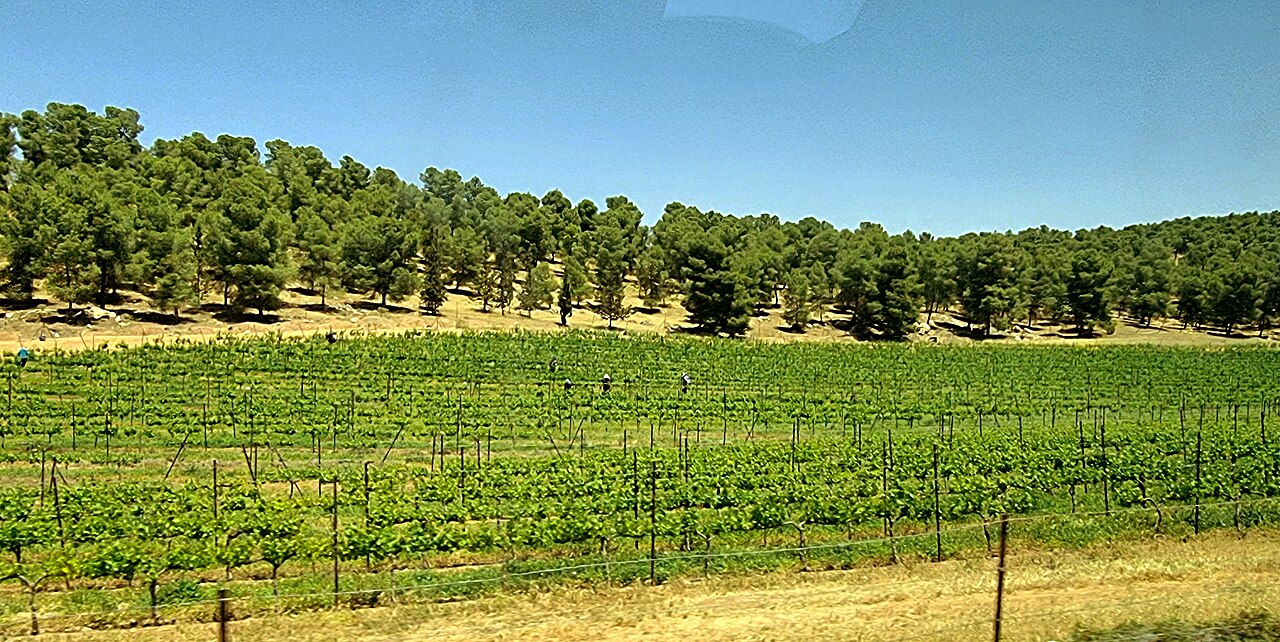
Vineyards in Israel has exited for over 5000 years
In Jewish thought, wine symbolized:
- Joy and celebration (Psalm imagery reflected in culture)
- Blessing and abundance
- Future hope (often tied to the coming kingdom)
Scholars note:
- Running out of wine symbolized joy running out
- Abundant wine symbolized the arrival of divine blessing [8]
👉 Jesus doesn’t just fix a shortage—he restores joy and symbolic meaning.
🏺 The Stone Jars (Deep Symbolism)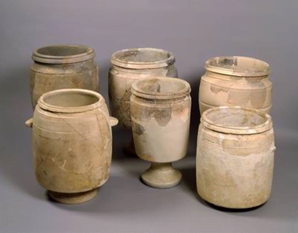
This is one of the most overlooked but important details:
- Six stone jars used for ritual purification
- Stone was used because it remained ritually clean [9]
- Each held 20–30 gallons (massive volume)
Scholarly meaning:
- They represent the old system of religious cleansing
- External purity through ritual washing
When Jesus uses them:
- He transforms water (ritual) → into wine (joy, life, celebration)
👉 Many scholars see this as symbolic:
- From external religion → internal transformation
- From old covenant → new reality [10]
🧠 Why the Miracle is So Massive (Scale + Detail)
The scale is often missed:
- ~6 jars × 20–30 gallons = 120–180 gallons of wine
- Far beyond what was needed
Scholars highlight:
- This level of abundance reflects divine generosity
- It removes any possibility of coincidence or trickery [11]
👉 This is not just provision—it’s overabundance
🎬 A Hidden Miracle (Narrative Strategy)
Unlike later miracles:
- This one is not public
- Only servants + disciples know what happened
The host:
- Never realizes where the wine came from
👉 This supports a key idea:
- The miracle was aimed at forming belief, not gaining attention
👀 “My Hour Has Not Yet Come” (Theological Timing)
Jesus’ response introduces a major theme:
- “My hour” refers later to:
- His death
- His full revelation
Scholars note:
- This moment connects the miracle to the entire arc of his mission [12]
👉 The tension:
- The request is immediate
- The mission is long-term
This reinforces:
- Jesus operates on deliberate timing, not urgency
🔥 The Purpose of the Miracle (Explicit in the Text)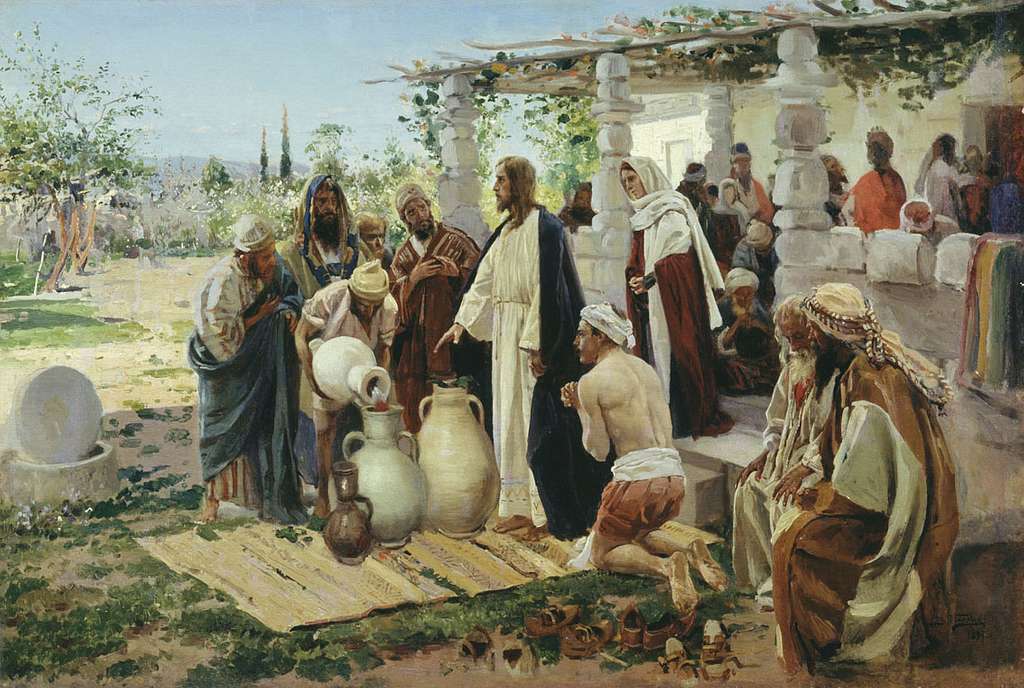
John tells us directly:
“He revealed his glory, and his disciples believed in him.” (John 2:11)
Scholarly consensus:
- “Signs” in John are meant to reveal identity and create belief [13]
👉 The primary audience:
- Not the crowd
- The disciples
This is a foundation moment for trust.
⚡ Narrative Consequence (Why This Small Beginning Matters)
Immediately after this:
- Jesus clears the temple (John 2:13–17)
- Acts radically
- Confronts power structures
Without Cana:
- He could appear unstable or extreme
👉 This miracle functions as:
- A credibility anchor
- A reason to keep following him
🌍 Historical Expansion (From That Moment)
From this small beginning:
- Christianity becomes the largest religion in the world (~2+ billion) [14]
- Jesus becomes one of the most influential figures in history
Historians widely agree:
- Jesus’ existence and impact are among the best-attested in antiquity [15]
👉 The contrast is the point:
- Small, hidden start → unmatched global impact
🧠 Structural Insight: How Movements Actually Start
There’s a pattern that shows up again and again across history, but you rarely notice it while it’s happening. Movements almost never begin the way they end. They don’t start with crowds or influence or global reach—they start quietly, almost invisibly.
More often than not, they take shape in small, unremarkable moments. A conversation. A relationship. A decision that doesn’t feel significant at the time. The beginnings are relational, not strategic. They’re local, not global. They involve a handful of people, not thousands watching from a distance.
That’s exactly what’s happening here.
There’s no stage. No audience. No announcement that something history-changing has just begun. Just a wedding—an ordinary family celebration in a small village, a moment most people would never think twice about. A problem arises, a mother steps in, a son responds, and a small group of people quietly witness something they don’t fully understand yet.
But inside that moment—hidden in plain sight—is everything.
The trajectory is already set. The identity is being revealed. The trust that will carry everything forward is beginning to take root. It’s small, but it’s real. And because it’s real, it will grow.
What looks insignificant is actually foundational.
📎 Sources & Attribution
- Gospel of John 2:1–11
- Historical scholarship on first-century Jewish weddings & honor–shame culture
- Archaeological and cultural studies on stone purification jars
- Biblical scholarship on “signs” in the Gospel of John
- Historical research on the influence and historicity of Jesus
If you want, I can now:
- Match tone exactly to your earlier chapter notes (same sentence rhythm/style), or
- Add a short “✨ Reflection Prompts” section at the end (some creators are using that and it works really well).
[1]https://biblehub.com/topical/w/wedding_at_cana.htm
[2]https://en.wikipedia.org/wiki/Wedding_at_Cana
[3]https://biblehub.com/topical/w/wedding_at_cana.htm
[4]https://www.worthbeyondrubies.com/jesus-turning-water-into-wine-meaning/
[5]https://hrcak.srce.hr/file/252729
[6]https://static1.1.sqspcdn.com/static/f/38692/299476/1265803446617/Honor+and+Shame.pdf
[7]https://hrcak.srce.hr/file/252729
[8]https://www.worthbeyondrubies.com/jesus-turning-water-into-wine-meaning/
[9]https://biblehub.com/q/Why_are_six_stone_jars_important_in_John_2_6.htm
[10]https://catholicus.eu/en/the-wedding-at-cana-the-miracle-that-revealed-the-glory-of-christ/
[11]https://biblehub.com/q/Why_are_six_stone_jars_important_in_John_2_6.htm
[12]https://www.studylight.org/commentaries/eng/ghe/john-2.html
[13]https://biblehub.com/topical/w/wedding_at_cana.htm
[14]https://bibleinterp.arizona.edu/articles/theology-philosophy-and-historical-figure-jesus