Have this chapter read to you on YouTube – Click Here
A new audiobook chapter is released each week on the podcast and YouTube channel starting May 1st, 2026 completely free. Subscribe now
Introduction: Josh
Going Deeper

Why Call Him Josh? 
Before anybody gets upset, let me say this right up front: I’m not trying to rename Jesus. I’m trying to help people see him.
For many of us, the name Jesus comes preloaded with assumptions: church traditions, political arguments, artwork, stained-glass windows, Christmas pageants, movies, and a lifetime of cultural baggage. Whether that baggage is positive or negative, most of us already have a picture in our heads before we ever read a Gospel for ourselves.
That’s why I used “Josh.” Not because it’s the perfect translation of Yeshua, and not because Christians should suddenly change their vocabulary. Hearing a more familiar name forces us to remember that Jesus was a real first-century Jewish man from an overlooked village in Galilee. He had neighbors, relatives, and a hometown reputation. For most of his life, people knew him as a local kid before they knew him as a teacher.
The moment we hear a name like Josh, the religious fog lifts for a second. Suddenly we’re not looking at an icon. We’re looking at a person. Before we decide what we believe about Jesus, we have to remember that he actually lived.
The Jesus Nobody Pictures
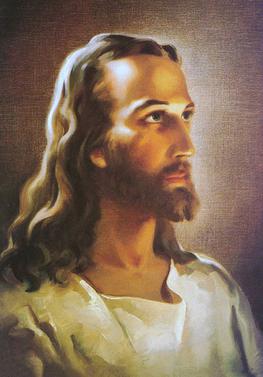
Its doubtful Jesus looked like this painting from my childhood church…
One of the strangest things about Jesus is that almost everybody pictures him, yet nobody knows what he looked like. The Gospel writers tell us about his birth, teachings, miracles, death, and resurrection, but never give us his height, eye color, hairstyle, weight, or facial features.
That hasn’t stopped us from filling in the blanks. Over the centuries, nearly every culture has recreated Jesus in its own image. The problem comes when our imagined Jesus begins replacing the actual Jesus. Historically speaking, Jesus almost certainly looked like what he was: a first-century Jewish man from the Middle East, with the weathered appearance of someone who spent much of his life outdoors.
The irony is that the people most concerned with Jesus’ appearance are usually the people furthest removed from his world, while the people who actually knew him never thought it was worth mentioning.
Was There Anything Remarkable About Jesus’ Appearance?
Ironically, the closest thing we have to a physical description of Jesus may come from a prophecy that seems to tell us what he wasn’t.
Isaiah 53 contains one of the most famous messianic passages in the Old Testament. Christians have long understood it as describing the suffering servant fulfilled in Jesus. Buried in the chapter is a statement many readers overlook:
“He had no beauty or majesty to attract us to him, nothing in his appearance that we should desire him.”Isaiah 53:2
If Isaiah is describing the Messiah, there may have been nothing visually remarkable about him at all. That fits the Gospels. People followed Jesus because of his authority, compassion, and power, not because of the way he looked. Even Judas had to identify him for the arresting party with a kiss.
The Messiah Nobody Expected
One reason Jesus was difficult for many people to recognize is that they weren’t just looking for a Messiah. They were looking for a particular kind of Messiah.
Israel had spent centuries under foreign powers. Many understandably hoped the Messiah would arrive as a conquering king. Isaiah spoke of a coming ruler, Daniel described a kingdom that would never end, and the prophets promised restoration and victory. The problem wasn’t that those prophecies were wrong. Many people focused on the King while overlooking the Servant.
Isaiah 53 described a Messiah who would suffer. Zechariah described a king arriving humbly on a donkey. Psalm 22 painted a picture of rejection, suffering, and humiliation. People were waiting for somebody powerful enough to conquer Rome. They weren’t expecting somebody willing to die for Rome.
Why Nobody Described His Face
Imagine spending years with someone, eating meals together, walking roads together, listening to them teach, watching them heal people, and then spending the rest of your life telling people about them without mentioning their appearance. That doesn’t happen accidentally.
The Gospel writers seem remarkably uninterested in preserving what Jesus looked like and intensely interested in preserving who he was. Our culture often works in the opposite direction. We obsess over appearances and measure influence by visibility.
The Gospels don’t allow us to do that with Jesus. We are forced to wrestle with his words, claims, actions, and identity. We have to deal with the substance of who he was.
Jesus the Construction Worker
One of the easiest mistakes to make is imagining Jesus spending thirty years preparing to be a preacher. The Gospels suggest something far more ordinary. Jesus worked.
Most English Bibles use the word “carpenter,” but the Greek word tekton is broader. It refers to a builder, craftsman, or construction worker. Depending on local materials and available jobs, the work could involve stone, wood, repairs, and substantial building projects.
During Jesus’ lifetime, nearby cities such as Sepphoris were being developed and rebuilt. We cannot prove Jesus personally worked there, but construction and craftsmanship were part of his world. When he spoke about foundations, towers, gates, laborers, and builders, he was drawing from a life he knew.
The overwhelming majority of his earthly years were spent not preaching sermons but living an ordinary life among ordinary people. He understood work, fatigue, responsibility, disappointment, and the pressure of making a living because he had lived it himself.

Nazareth: The Place Nobody Expected
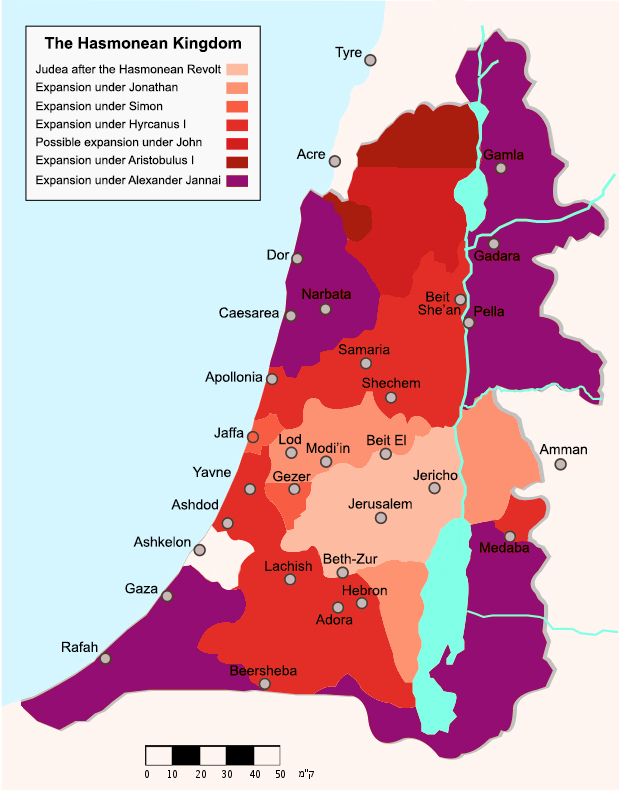
Nazareth was small, ordinary, and easy to overlook.
When Nathanael first heard about Jesus, his reaction wasn’t exactly enthusiastic: “Can anything good come out of Nazareth?” Questions like that are reserved for places people don’t expect much from.
Nazareth wasn’t a cultural, political, or religious center. Archaeologists believe first-century Nazareth may have had only a few hundred residents. It was the kind of town where everybody knew everybody, news traveled fast, and family history followed you everywhere.
Again and again throughout Scripture, God works through people and places the world overlooks. David wasn’t even invited when Samuel came looking for Israel’s next king. Gideon described himself as the least significant member of the least significant clan. The disciples were fishermen, tax collectors, and ordinary laborers.
Nazareth doesn’t just tell us where Jesus grew up. It tells us something about how God works.
The Problem With Recreating Jesus in Our Own Image
Every generation is tempted to remake Jesus. Sometimes we make him a politician, philosopher, social reformer, life coach, or mascot for whatever cause matters most to us. People from opposite sides of an issue often claim Jesus is entirely on their side. That should probably make us nervous.
The real Jesus refuses to fit comfortably inside our categories. He challenged religious leaders and political leaders. He comforted people and offended people. He showed astonishing compassion while making astonishing demands.
The moment we’re convinced we’ve completely figured him out is often the moment we’re most in danger of replacing him with a version of ourselves.

Why This Matters More Than You Think
At first glance, this may seem like a discussion about history, language, culture, archaeology, and artwork. It really isn’t. It’s a discussion about truth.
Who was Jesus? Not the Jesus from a painting, politics, social media, or even the one inherited from a church tradition. The actual Jesus.
If Jesus was merely a good teacher, one response makes sense. If he was a misguided religious leader, a different response makes sense. If he was a myth, another response makes sense. But if he was who he claimed to be, ignoring him stops being an intellectual question and becomes a personal one.
The purpose of this chapter was never to make Jesus seem less divine. It was to make him seem more real. And sometimes that’s the more uncomfortable truth.
Scriptures Worth Revisiting
Read Isaiah 53, Psalm 22, John 1, Luke 2:41-52, Mark 6:1-6, Philippians 2:5-11, and Zechariah 9:9 alongside this chapter. Notice how often the Old Testament paints a picture of a Messiah who is humble, overlooked, suffering, and unexpected, while still being described as a king.
Questions Worth Wrestling With
- What picture of Jesus lives in your mind, and where did it come from?
- How much of that picture comes from Scripture and how much comes from culture?
- Why do you think the Gospel writers never described Jesus physically?
- What assumptions about Jesus have you inherited without examining?
- Have you ever rejected a version of Jesus that wasn’t actually the Jesus of the Gospels?
- Why did God choose obscurity, poverty, and Nazareth as the backdrop for the Incarnation?
- What would change if you approached Jesus as a real historical person instead of a religious symbol?
If You Want to Dig Further
Read Isaiah 53 and Psalm 22 in their entirety. Compare them with the Gospel accounts and ask why so many early Christians saw Jesus in those passages.
Spend time reading about first-century Galilee, Nazareth, and Jewish life under Roman rule. Most importantly, go back to the Gospels themselves. Read them as if you’ve never met Jesus before, then ask a simple question: Who is this man?